
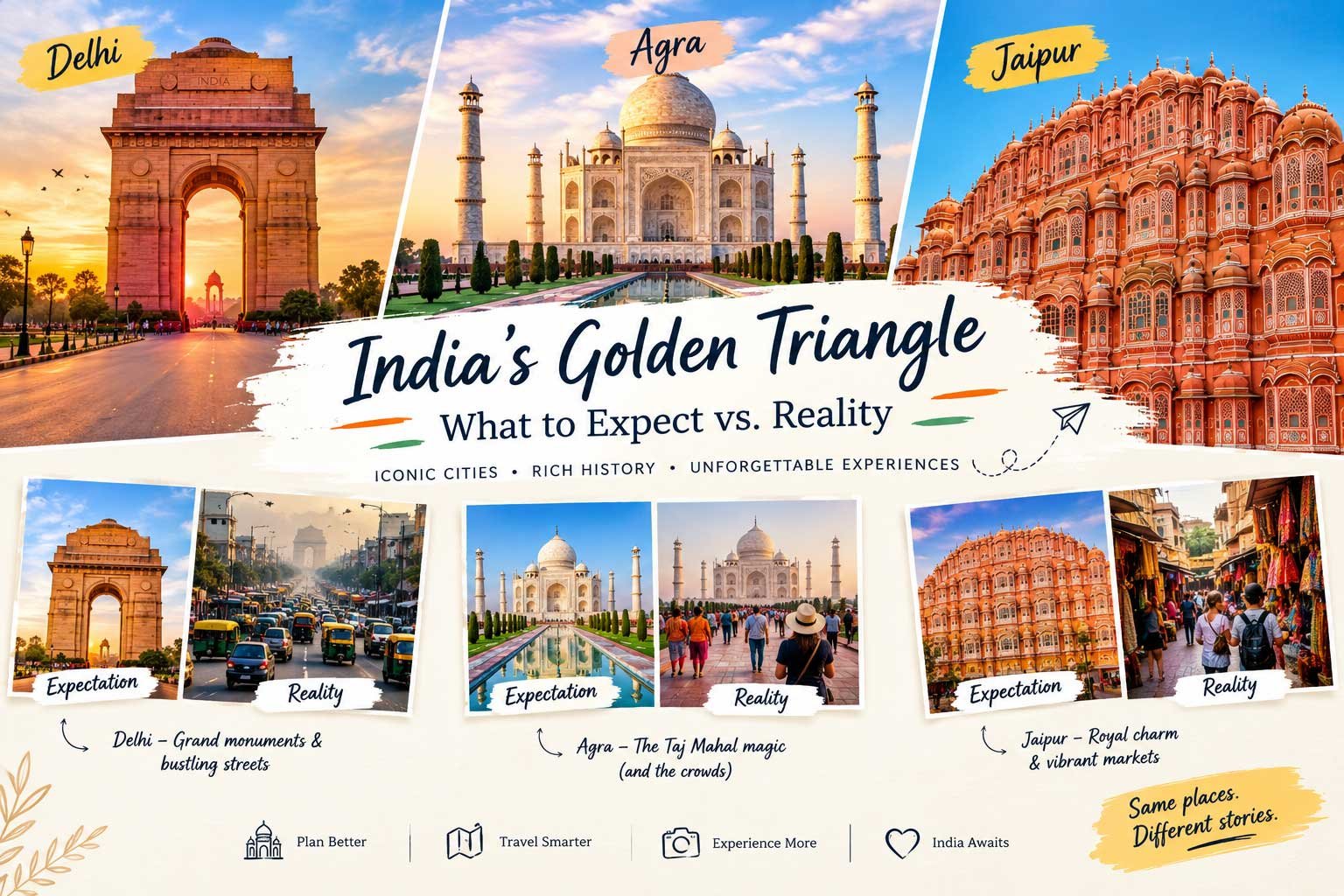
India’s Golden Triangle: What to Expect vs. Reality
Golden Triangle India — covering Delhi, Agra, and Jaipur — is one of the most popular travel routes for first-time visitors to India. The route combines Mughal monuments, royal palaces, historic markets, vibrant culture, and some of the country's most famous landmarks. But what you see in photographs and what you experience on the ground can be quite different.
This guide explains what to realistically expect in Delhi, Agra, and Jaipur, along with practical advice on transportation, sightseeing, hotels, guides, timing, and local experiences.
Here’s an honest look at what you will actually encounter — and how to make the most of your trip. Start with our first-time India travel guide and explore Delhi’s hidden gems.
Delhi: Expect a City, Find a Civilisation
What You Expect
A busy capital with famous monuments, crowded streets, and plenty of traffic.
The Reality
Delhi is actually a collection of historic cities layered across thousands of years of history. Mughal forts, British colonial boulevards, medieval bazaars, and modern metro lines all coexist within minutes of each other.
Old Delhi, in particular, can feel intense. The lanes around Chandni Chowk are among the most energetic urban environments in India — exhilarating for some visitors and overwhelming for others.
A knowledgeable local guide can change the experience considerably. Instead of simply passing through the busiest areas, you can explore places such as the spice market, Jama Masjid, historic havelis, and local food streets with greater context.
New Delhi offers a very different atmosphere. Its wide boulevards and Lutyens-era architecture feel considerably more spacious, while monuments such as Humayun’s Tomb provide a quieter introduction to India’s Mughal history.
Getting Around Delhi
Auto-rickshaws can be a fun way to travel short distances, although visitors may need to negotiate fares. Delhi Metro is another practical option and connects many major areas of the city.
For airport transfers, hotel transfers, and full-day sightseeing, a pre-arranged chauffeur-driven car can be more convenient, particularly for first-time visitors who are unfamiliar with the city.
Agra: The Taj Is Real — and So Is Everything Around It
What You Expect
The Taj Mahal will look exactly like the photographs.
The Reality
In many ways, it does — and the monument can still exceed expectations when you see it in person. However, Agra itself can feel very different from the polished images associated with the Taj Mahal. Traffic, busy approach roads, and persistent tourist activity are part of the experience.
Timing matters enormously. A sunrise visit can provide beautiful early-morning light. The Taj Mahal is closed on Fridays; check official ticket and opening information before booking.
Agra Fort is another major attraction that deserves more than a quick stop. Allow around two to three hours if you want to explore the complex properly and understand its role in Mughal history.
Fatehpur Sikri, approximately 40 km from Agra, is another worthwhile addition. This remarkably preserved Mughal-era city provides a very different experience from the Taj Mahal and can be included as part of a well-planned itinerary.
The Agra Reality Check
Agra itself is not necessarily the prettiest city on the route, but the right hotel can significantly improve your stay. Some properties offer views toward the Taj Mahal, allowing you to experience the monument from a quieter setting.
Jaipur: The Pink City Delivers — If You Go Beyond the Surface
What You Expect
A photogenic pink city with spectacular forts, palaces, colourful markets, and traditional Rajasthani culture.
The Reality
Jaipur delivers much of that — but it is also a fully functioning modern city with traffic, busy streets, commercial areas, and plenty of everyday activity.
Amber Fort is impressive, the City Palace provides an insight into Jaipur’s royal history, and Jantar Mantar is one of the most unusual historic astronomical sites in India.
The city's bazaars are particularly popular for textiles, jewellery, handicrafts, and traditional products. However, visitors should expect persistent selling in some tourist-oriented areas.
Going beyond the major attractions can make the experience much more memorable. Block-printing workshops, blue pottery studios, cooking classes, food walks, and interactions with local families can provide a deeper understanding of Jaipur.
Plan the Route at a Comfortable Pace
A well-planned itinerary gives you enough time to experience each destination without spending most of your trip sitting in traffic. Delhi deserves time for its historic neighbourhoods and monuments, Agra needs more than a quick Taj Mahal visit, and Jaipur offers far more than its famous forts and palaces.
For most first-time visitors, a Golden Triangle India trip works well with around 7–9 days. This gives you enough time for sightseeing while also allowing space for local food, markets, cultural experiences, and slower mornings.
What Most People Get Wrong
| Common Mistake | Better Approach |
|---|---|
| Rushing all three cities in 5 days | Allow around 7–9 days for a more relaxed experience. |
| Relying entirely on shared tourist buses | Consider a private, chauffeur-driven AC car for flexibility and comfort. |
| Booking guides on the street | Arrange knowledgeable local guides in advance. |
| Choosing accommodation only on price | Consider boutique hotels, modern hotels, heritage properties, and well-reviewed homestays. |
| Visiting only the famous landmarks | Include markets, food experiences, workshops, and local cultural activities. |
How Many Days Do You Need for the Golden Triangle?
Although it is technically possible to visit Delhi, Agra, and Jaipur in five days, a longer itinerary is generally more comfortable.
A 7-day itinerary can provide a good introduction to the three destinations, while 8–9 days allows additional time for cultural experiences, shopping, local food, and less rushed sightseeing.
If you have more than a week, you can also consider adding destinations such as Ranthambore, Pushkar, Varanasi, or Udaipur depending on your interests and travel schedule.
Getting Between Delhi, Agra and Jaipur
The road journey between the three cities is an important part of the experience. Delhi to Agra, Agra to Jaipur, and Jaipur to Delhi can each take several hours depending on traffic and road conditions.
A private air-conditioned car provides flexibility because you can stop for meals, photographs, viewpoints, or attractions along the route. Trains can also be a practical option, particularly between Delhi and Agra.
The best transportation choice depends on your budget, schedule, comfort preferences, and the number of stops you want to make.
Why Local Knowledge Matters
The Golden Triangle is one of India’s most visited travel routes, so visitors will encounter busy attractions, commercial areas, touts, and tourist-focused businesses.
Having reliable local information can make the trip easier. A knowledgeable guide can explain the history behind major monuments, help navigate busy markets, and introduce experiences that may be difficult to find independently.
A specialist travel company can also coordinate accommodation, transportation, guides, sightseeing times, and activities into a single itinerary.
Best Experiences Beyond the Famous Monuments
The major landmarks are the reason many travellers choose the Golden Triangle, but some of the most memorable moments can happen away from them.
- Explore the markets and food streets of Old Delhi.
- Visit local craft and textile workshops in Jaipur.
- Try traditional Indian dishes with a local guide.
- Explore lesser-known historic buildings and neighbourhoods.
- Visit local markets for textiles, handicrafts, and traditional products.
- Experience the Taj Mahal at sunrise.
- Take time to explore Agra Fort and Fatehpur Sikri.
Practical Tips for First-Time Visitors
- Allow enough time instead of trying to see everything in a few days.
- Start major sightseeing early, particularly during hotter months.
- Wear comfortable shoes because many monuments involve considerable walking.
- Carry water and stay hydrated while sightseeing.
- Use licensed or pre-arranged guides where possible.
- Be cautious with unsolicited shopping recommendations.
- Keep valuables secure in crowded markets and transport areas.
- Check monument opening days and visiting rules before travelling.
Why a Travel Company Can Make the Golden Triangle Easier
Independent travel through Delhi, Agra, and Jaipur is possible, but coordinating hotels, transportation, sightseeing schedules, guides, and attraction tickets can require considerable planning.
A specialist travel company can handle much of this coordination and build an itinerary around your interests, budget, travel dates, and preferred pace.
The key is finding the right balance between famous landmarks and authentic local experiences. The Taj Mahal at sunrise may be a highlight, but so can be an evening food walk in Delhi, a local craft experience in Jaipur, or a roadside breakfast during a journey between cities.
Key Takeaways
- The Golden Triangle India route combines Delhi, Agra, and Jaipur into one accessible introduction to Indian history and culture.
- Allow around 7–9 days if you want to explore without constantly rushing.
- Private transfers can provide greater flexibility between destinations.
- Start major sightseeing early when possible.
- Go beyond the famous monuments to discover markets, food, crafts, and local experiences.
- Plan transportation, accommodation, guides, and attraction timings before arrival.
Frequently Asked Questions About Golden Triangle India
What is the best way to travel between Delhi, Agra, and Jaipur?
A private, chauffeur-driven air-conditioned car is a flexible option for travellers who want door-to-door transportation and the ability to stop along the way. Trains can also be a useful alternative, particularly for the Delhi–Agra route.
Is the Golden Triangle suitable for first-time visitors to India?
Yes. Delhi, Agra, and Jaipur provide a broad introduction to India's history, architecture, food, markets, and culture. The route is also well established for international tourism.
Can I do the Golden Triangle independently?
Yes. You can arrange accommodation, transportation, tickets, and guides independently. However, this requires more advance planning, particularly if you are visiting India for the first time.
How many days are enough for Golden Triangle India?
Five days is possible for a fast-paced trip, but 7–9 days gives most first-time visitors more time to explore Delhi, Agra, and Jaipur without rushing between major attractions.
What are the three cities in Golden Triangle India?
The three destinations are Delhi, Agra, and Jaipur. Together they form one of India's most popular travel circuits.
Is Golden Triangle India expensive?
The cost varies considerably depending on your hotels, transportation, dining choices, guides, activities, and travel season. The route can be planned for different budgets, from affordable stays and public transportation to luxury hotels and private chauffeur-driven travel.
First Time in India? 10 Essential Things to Know Before You Go
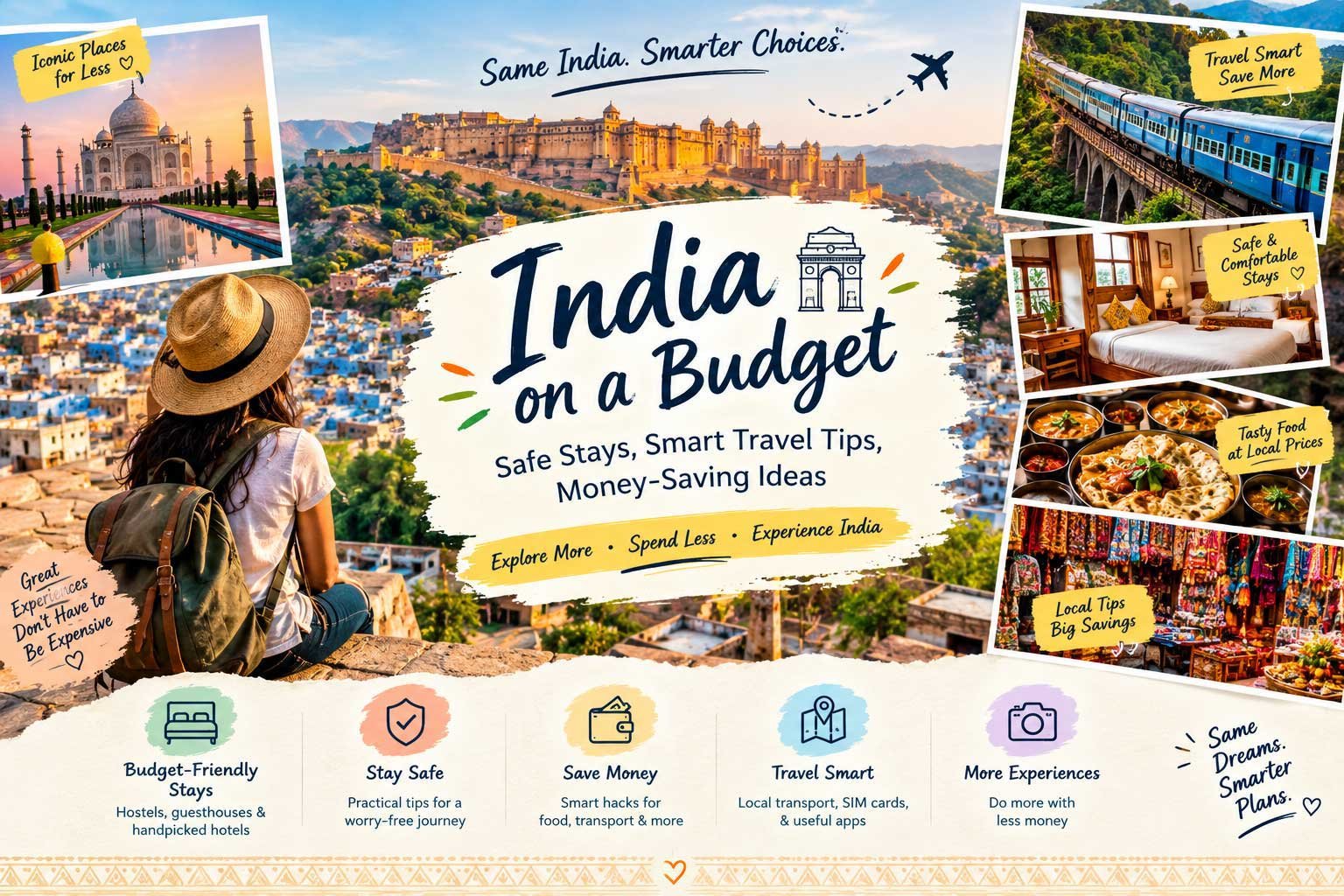
India on a Budget: Safe Stays, Smart Travel Tips & Money-Saving Ideas
Is India Safe for Western Travellers in 2026?

20 Reasons to Visit India in 2026: Culture, Food & Adventure
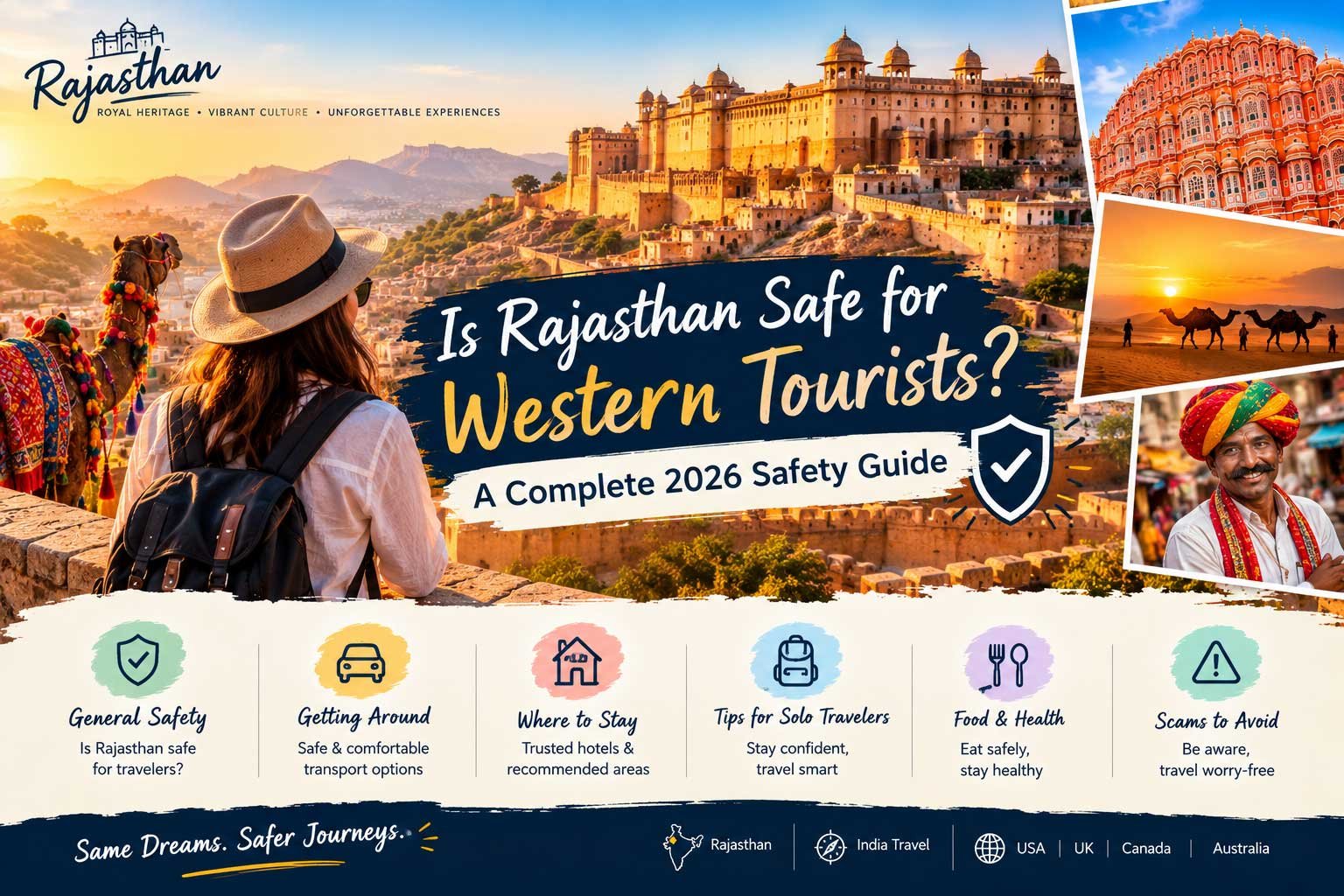
Is Rajasthan Safe for Western Tourists? A Complete 2026 Safety Guide
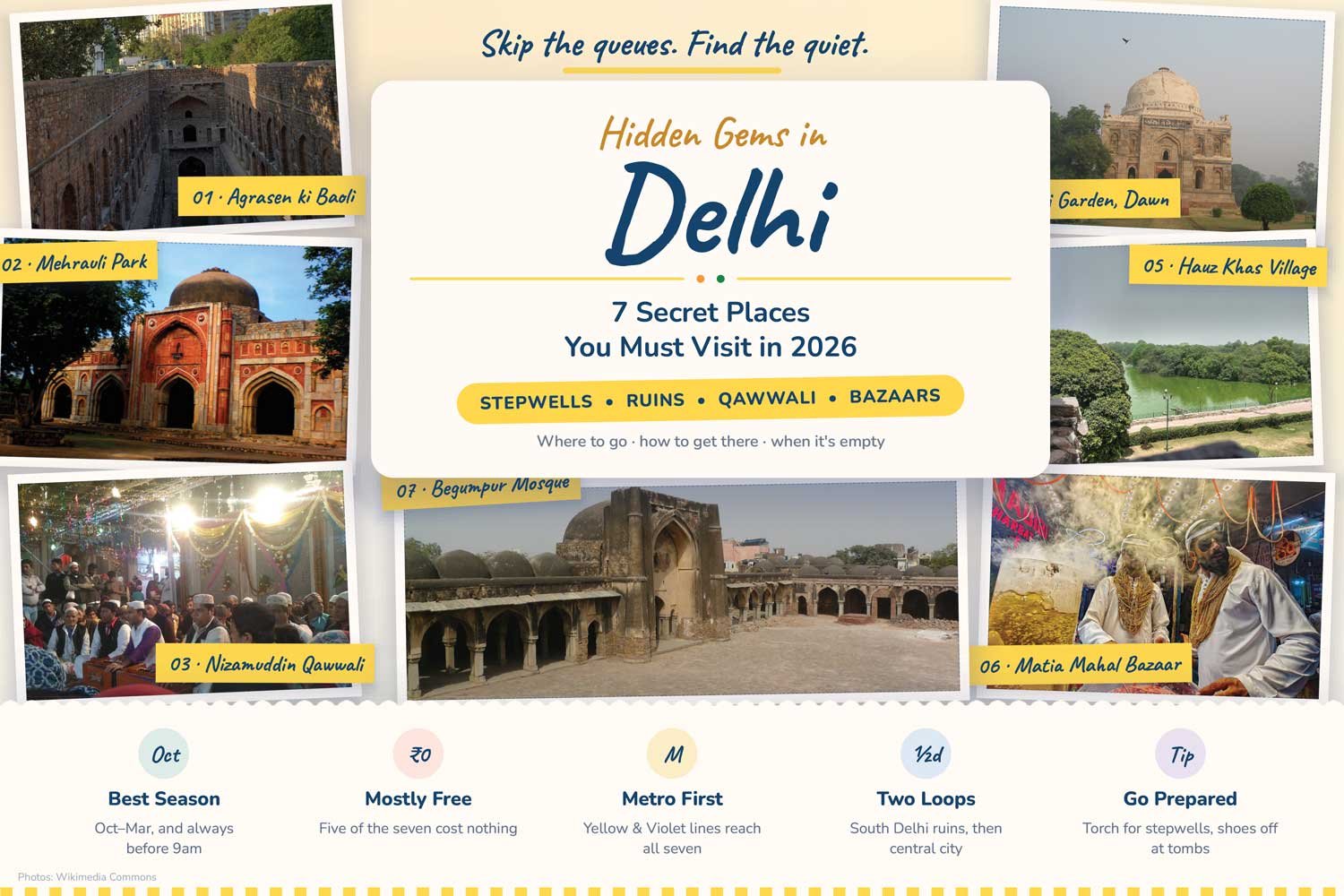
Hidden Gems in Delhi: 7 Secret Places You Must Visit in 2026
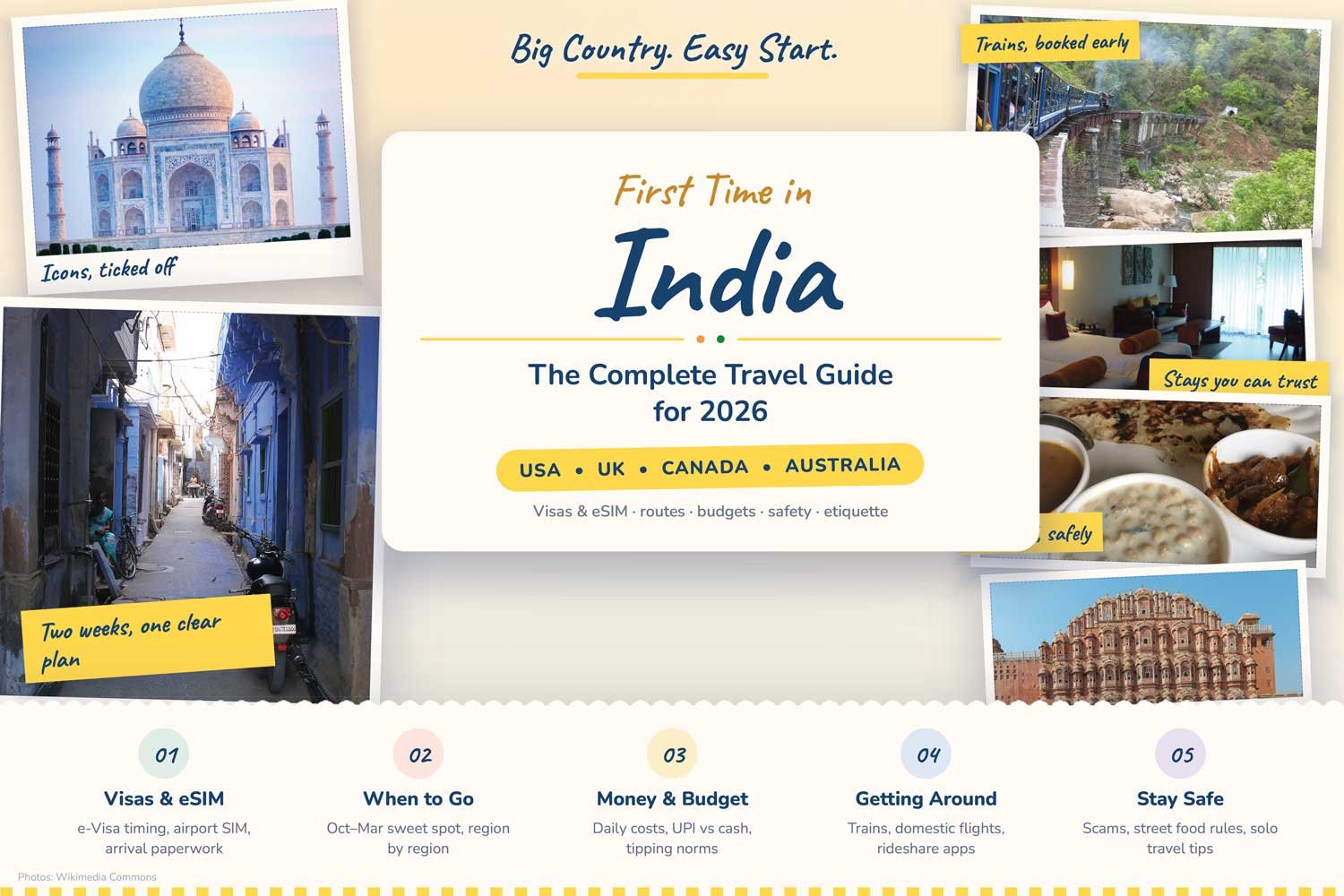
First Time in India: The Complete Travel Guide for 2026 (USA, UK, Canada & Australia)
First Time in India? 10 Essential Things to Know Before You Go
Ten practical checks before your first India trip: documents, arrival plans, phone access, payments, insurance, transfers and booking details.
India on a Budget: Safe Stays, Smart Travel Tips & Money-Saving Ideas
India on a Budget: Safe Stays, Smart Travel Tips & Money-Saving Ideas India is one of the world’s great value destinations. Costs vary widely by region, season and travel style — but that doesn’t mean anything goes. Travelling on a budget in India requires smart...
Is India Safe for Western Travellers in 2026?
Is India Safe for Western Travellers? Safety in India depends on your destination, activities and circumstances. Review the current official travel advice before choosing your route. Our first-time India travel guide explains visas, itineraries and health preparation....
20 Reasons to Visit India in 2026: Culture, Food & Adventure
20 Reasons to Visit India in 2026: Culture, Food & Adventure Introduction There are countless reasons to visit India, but for first-time travelers the biggest draw is the variety: ancient monuments, regional food, wildlife, festivals, beaches and the Himalayas can all...
Is Rajasthan Safe for Western Tourists? A Complete 2026 Safety Guide
Is Rajasthan Safe for Western Tourists? A Complete 2026 Safety Guide Rajasthan is where most people fall in love with India. The forts, the palaces, the desert landscapes, the colours — it delivers on every promise. It’s also one of the most visited regions in the...
Hidden Gems in Delhi: 7 Secret Places You Must Visit in 2026
Hidden Gems in Delhi: 7 Secret Places You Must Visit in 2026 Delhi overwhelms first-time visitors. The traffic, the noise, the sheer scale of it — most tourists retreat to the Golden Triangle highlights and leave thinking they’ve seen the city. They haven’t. Delhi...
First Time in India: The Complete Travel Guide for 2026 (USA, UK, Canada & Australia)
First Time in India: The Complete Travel Guide for 2026 (USA, UK, Canada & Australia) India doesn't ease you in. The moment you step off the plane — the heat, the colour, the noise, the scent of jasmine and spice — it hits you all at once. For first-time visitors, it...