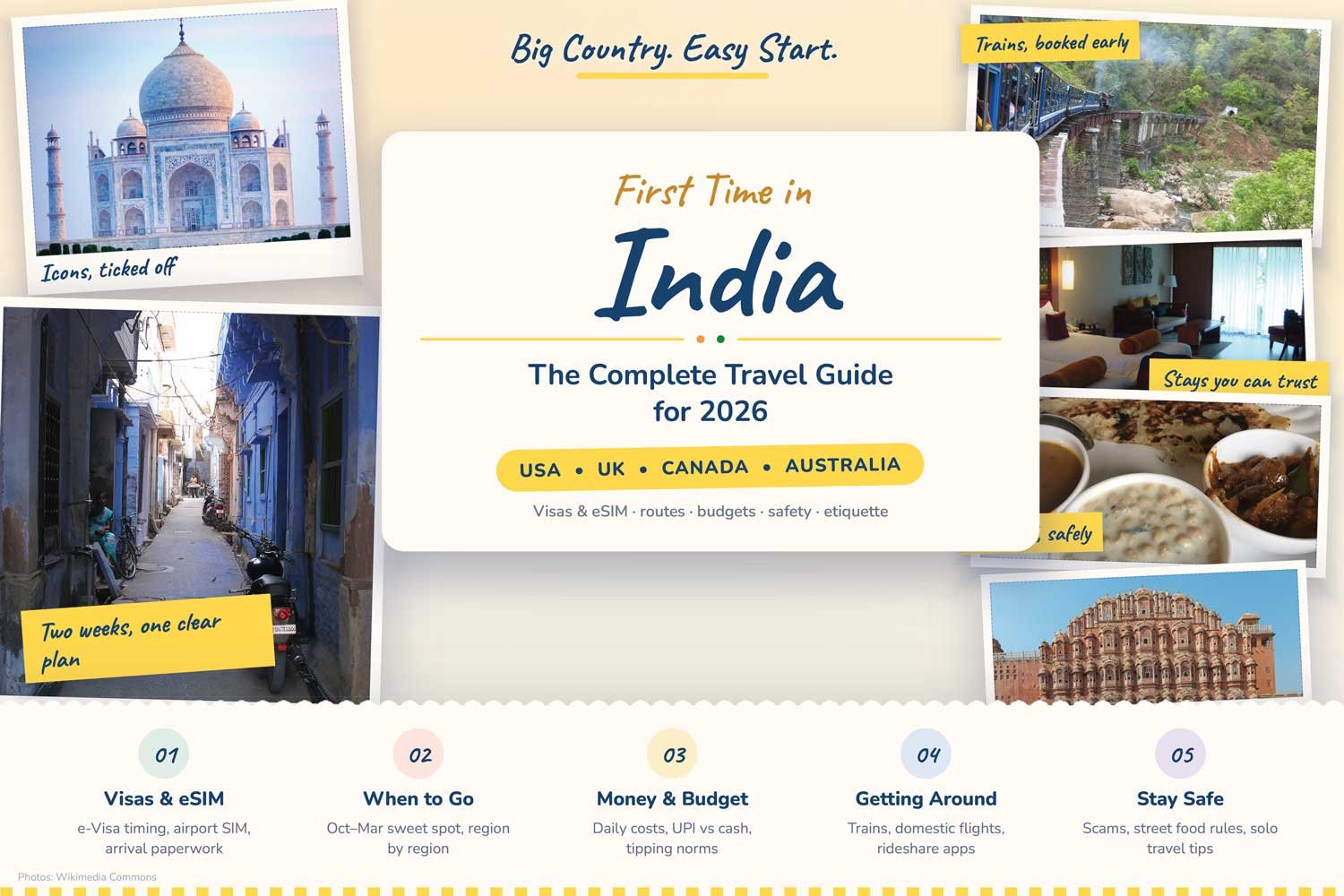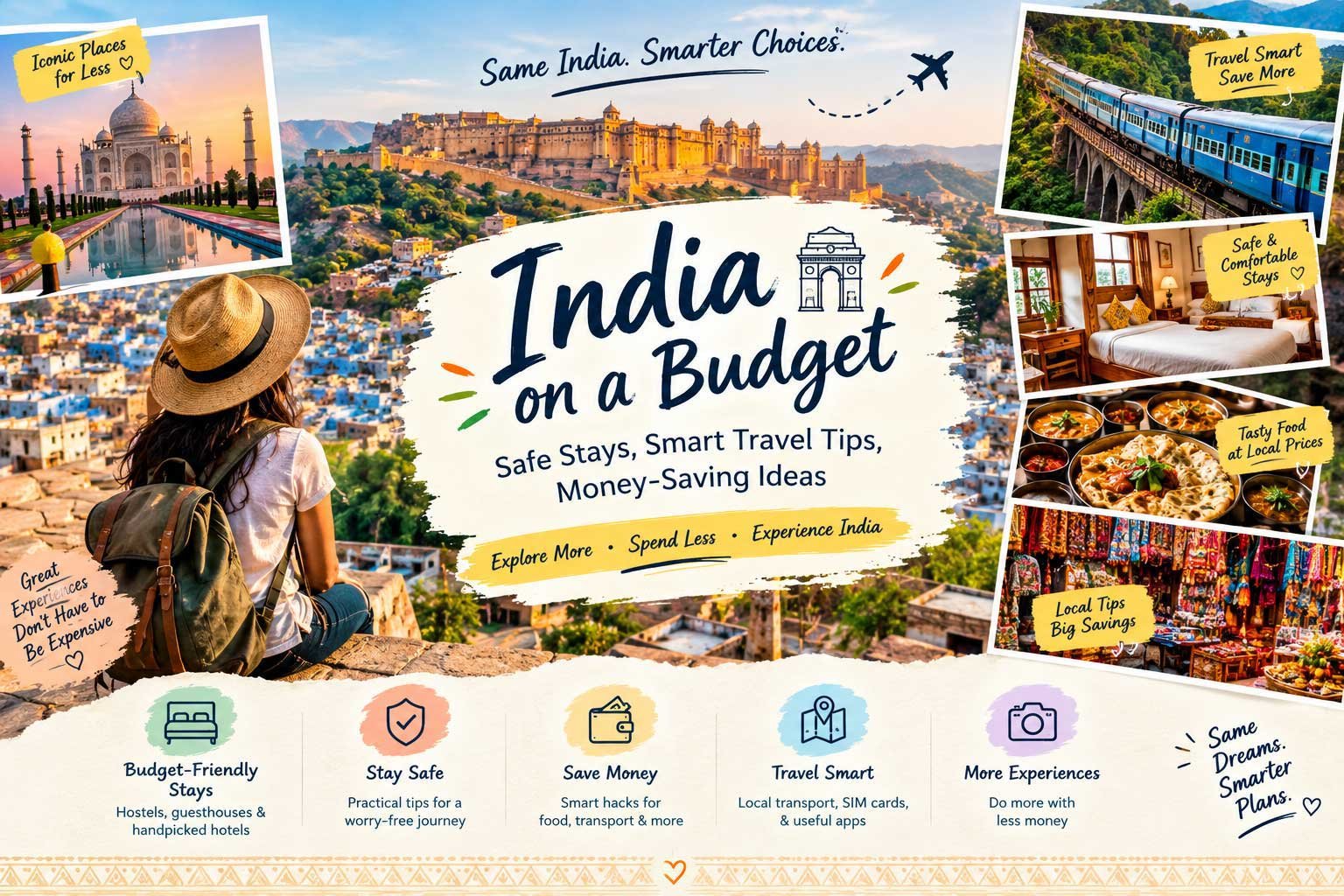
India on a Budget: Safe Stays, Smart Travel Tips & Money-Saving Ideas
India is one of the world’s great value destinations. Costs vary widely by region, season and travel style — but that doesn’t mean anything goes. Travelling on a budget in India requires smart decisions, not reckless ones. The good news is that safety and budget aren’t in conflict here. You just need to know where to spend and where to save. Start with our first-time India travel guide and Golden Triangle planning advice.
What “Budget Travel” Actually Means in India
For Western travellers, India offers an unusually wide spectrum. At one end, genuine backpacker infrastructure — dormitory beds, street food, local buses. At the other, extraordinary luxury at prices that would be mid-range in Europe or Australia.
The sweet spot for most first-time Western visitors sits in the middle — comfortable, well-located hotels, reliable transport, good food, and genuine experiences — at a fraction of what equivalent quality costs at home. This is the level at which a well-structured tour with a reputable travel company operates, and it’s often more affordable than travellers expect.
Where to Save
Accommodation
India has excellent mid-range accommodation — heritage guesthouses, boutique hotels, well-run business hotels — at prices that feel extraordinary by Western standards. The mistake budget travellers make is going too cheap. A guesthouse at $15 a night in an unfamiliar city sounds like a win until you’re in a poorly located, poorly maintained room with no support when something goes wrong.
A travel company’s hotel recommendations sit in a different category entirely. Ask how recommended properties are assessed, and check recent independent reviews. You get reliable quality, good locations, and the confidence that someone has your back if the room isn’t right. Often at prices not much higher than you’d pay booking blindly online.
Food
Eating well in India on a budget is one of travel’s great pleasures. A thali at a local restaurant costs almost nothing and can be outstanding. Street food — done right, at the right stalls — is some of the best food in the country. Your guide will know exactly where locals eat and steer you there rather than to the tourist-facing restaurants that charge three times as much for half the quality.
Entrance Fees and Attractions
Most of India’s major monuments have dual pricing — a lower rate for Indian nationals and a higher rate for foreign visitors. Even the foreign visitor price is modest by international standards. Budget for entrance fees but don’t agonise over them — they’re rarely a significant line item.
Where to Spend
Transport
This is not the place to cut corners. Unreliable, unsafe, or simply uncomfortable transport is where budget decisions have the most direct impact on your experience and safety. An unmarked taxi from a tout outside the station. An overnight bus with no seatbelts on a mountain road. A shared jeep so overcrowded you can’t move for eight hours.
Compare transport options by safety, vehicle condition, seatbelts, journey time, price and cancellation terms. Confirm driver credentials, vehicle condition and the planned route with the operator. For airport arrivals especially, having someone waiting with your name on a sign, ready to take you directly to your hotel in a clean, air-conditioned car, is not a luxury. It’s the right decision.
Guides
A good local guide at a major site transforms the experience. Amber Fort without a guide is a series of impressive rooms. Amber Fort with a knowledgeable guide is 600 years of Rajput history made vivid and personal. The cost difference is small. The experience difference is enormous.
Ask the operator about each guide’s qualifications, language skills and experience. They speak excellent English, understand what questions you’re likely to ask, and know the stories that don’t appear on the information boards. This is where spending a little more delivers disproportionate returns.
One or Two Special Experiences
Every India trip benefits from one or two experiences that sit above the everyday — a night in a heritage haveli, a cooking class with a local family, a dawn boat ride on the Ganges, a desert camp under the stars in Jaisalmer. These don’t have to be expensive. But they should be well-chosen. A travel company knows which operators deliver and which disappoint.
The Budget Travel Company Myth
Many first-time visitors to India assume that booking with a travel company is an expensive option reserved for luxury travellers. It isn’t.
A specialist India travel company works across a range of budgets. They know which hotels offer excellent value at every price point. They have established relationships with suppliers that individual travellers can’t access. They may help avoid some booking and logistics mistakes — the taxi scam on day one, the overpriced tour booked from a stranger, the night in a guesthouse that costs $20 but ruins a day of travel.
When you add up the cost of those mistakes — and factor in the time and energy spent managing logistics that a travel company handles invisibly — the gap between independent travel and a well-organised tour narrows considerably. Compare itemised quotes against equivalent independent bookings; a tour is not automatically cheaper.
Smart Budget Moves in India
Book airport transfers in advance. The chaos outside arrivals at Indian airports is real. A pre-arranged pickup in a chauffeur-driven car removes it entirely.
Use your travel company’s restaurant recommendations. They know where locals eat and which tourist-facing restaurants are overpriced.
Carry cash. ATMs are common in cities and larger towns but have limits and can run dry in smaller towns. Ask your travel company how much to carry for each leg of the trip.
Buy a local SIM on arrival. Airtel and Jio offer excellent value data plans. Your travel company can advise on the best option for your itinerary.
Don’t buy gems, carpets, or antiques from strangers. The markup is extraordinary, the quality variable, and unsolicited export-for-profit offers a recognised scam risk.
Tip guides and drivers appropriately. They work hard, they make your trip, and tipping is expected and appreciated. Your travel company will advise on appropriate amounts.
Key Takeaways
Budget travel in India rewards smart spending, not blanket cost-cutting.
Transport and guides are the two areas where spending a little more delivers disproportionate returns in safety and experience.
Compare independent bookings and organised tours using the same itinerary and inclusions; either approach requires careful planning.
Pre-arranged chauffeur-driven transfers, vetted accommodation, and local guides are the foundation of a well-managed India trip at any price point.
Frequently Asked Questions
Q: Is it cheaper to book a tour or travel independently in India?
A: When you account for the full cost — including the mistakes, scams, and inefficiencies that independent travellers typically encounter — a tour may cost more or less than independent travel; compare equivalent accommodation, transport and activities. Many travellers are surprised by how competitive structured tours are.
Q: What is a realistic daily budget for India?
A: A comfortable, well-organised trip with good mid-range hotels, chauffeur transfers, and guided sightseeing may be estimated at USD $100–$200 per person per day as an illustrative planning range, not a verified quote. Season, room sharing, route, inclusions and supplier prices can change the total. Budget backpacker travel is possible for less, but the compromises on transport and accommodation quality are significant and affect both safety and enjoyment.
Q: Are there hidden costs in India I should budget for?
A: Check for excluded monument fees, taxes, meals, transfers, tips, payment fees and optional excursions. Request an itemised quote and cancellation terms. Your travel company will give you a clear picture of what’s included and what to budget for separately before you travel.
Q: How do I avoid overpaying for things in India?
A: Use a travel company for major bookings — hotels, transport, guides, and experiences. For independent purchases like shopping and street food, your guide is your best resource. Knowing the right price before you start negotiating removes most of the friction.
First Time in India? 10 Essential Things to Know Before You Go
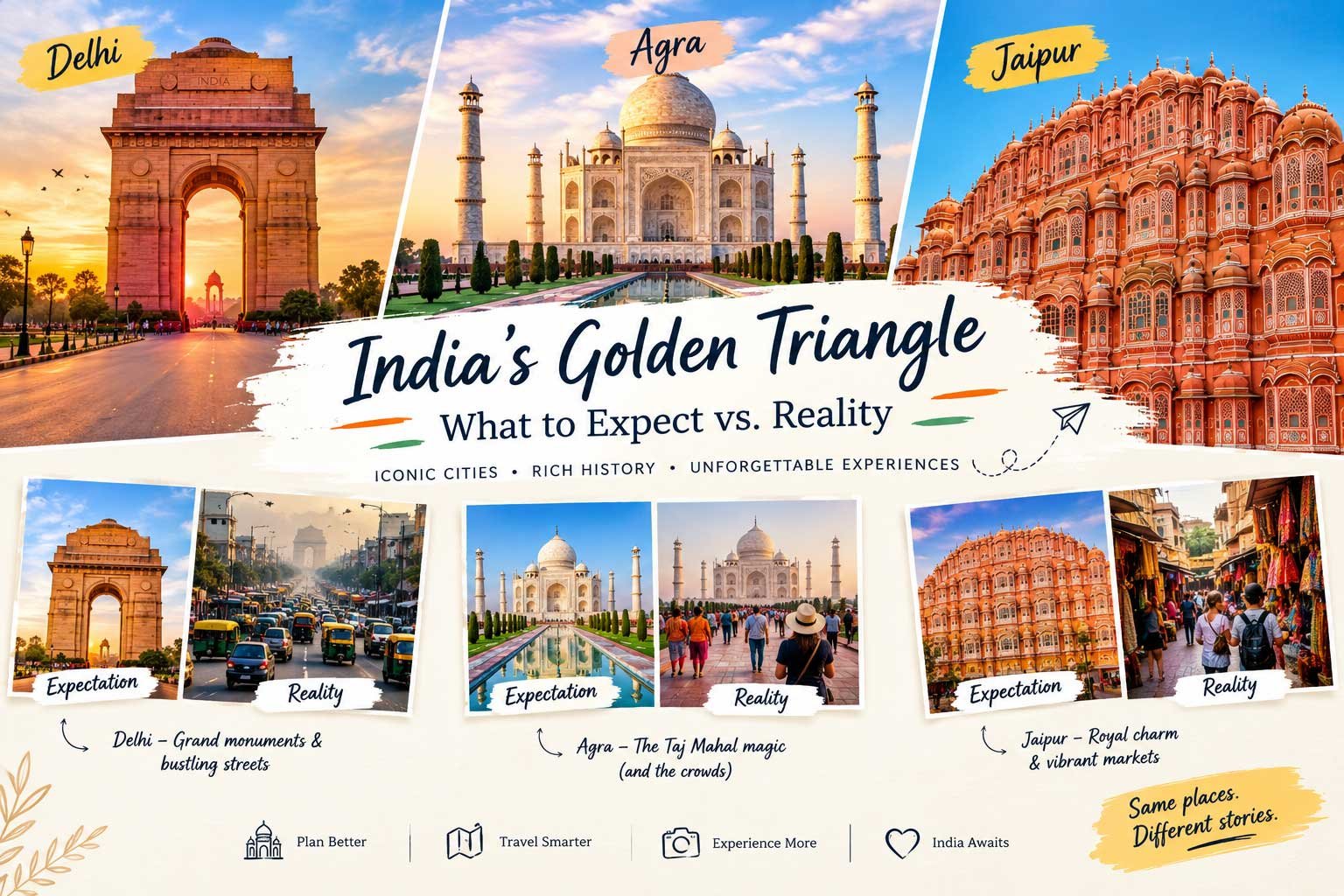
India’s Golden Triangle: What to Expect vs. Reality
Is India Safe for Western Travellers in 2026?

20 Reasons to Visit India in 2026: Culture, Food & Adventure
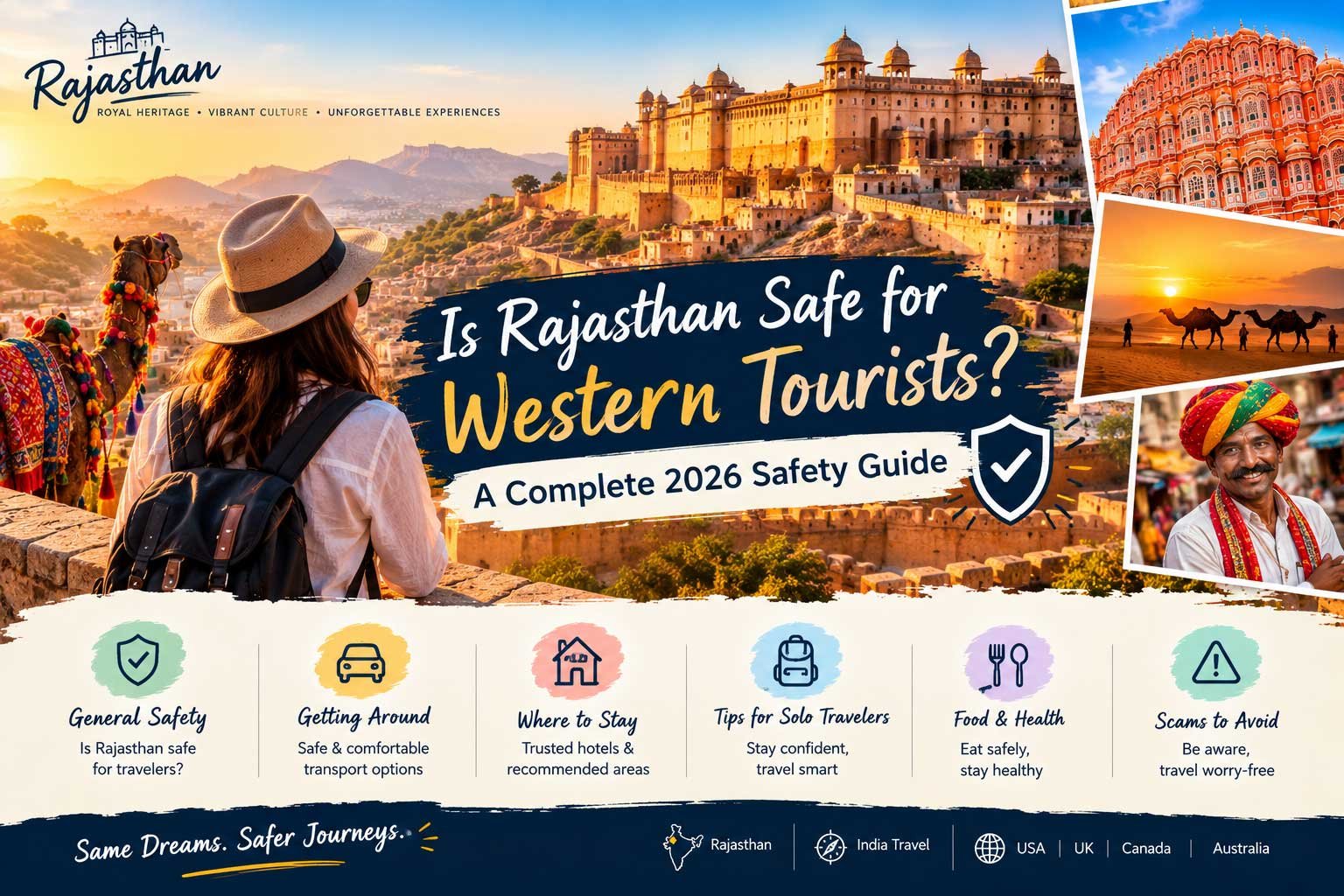
Is Rajasthan Safe for Western Tourists? A Complete 2026 Safety Guide
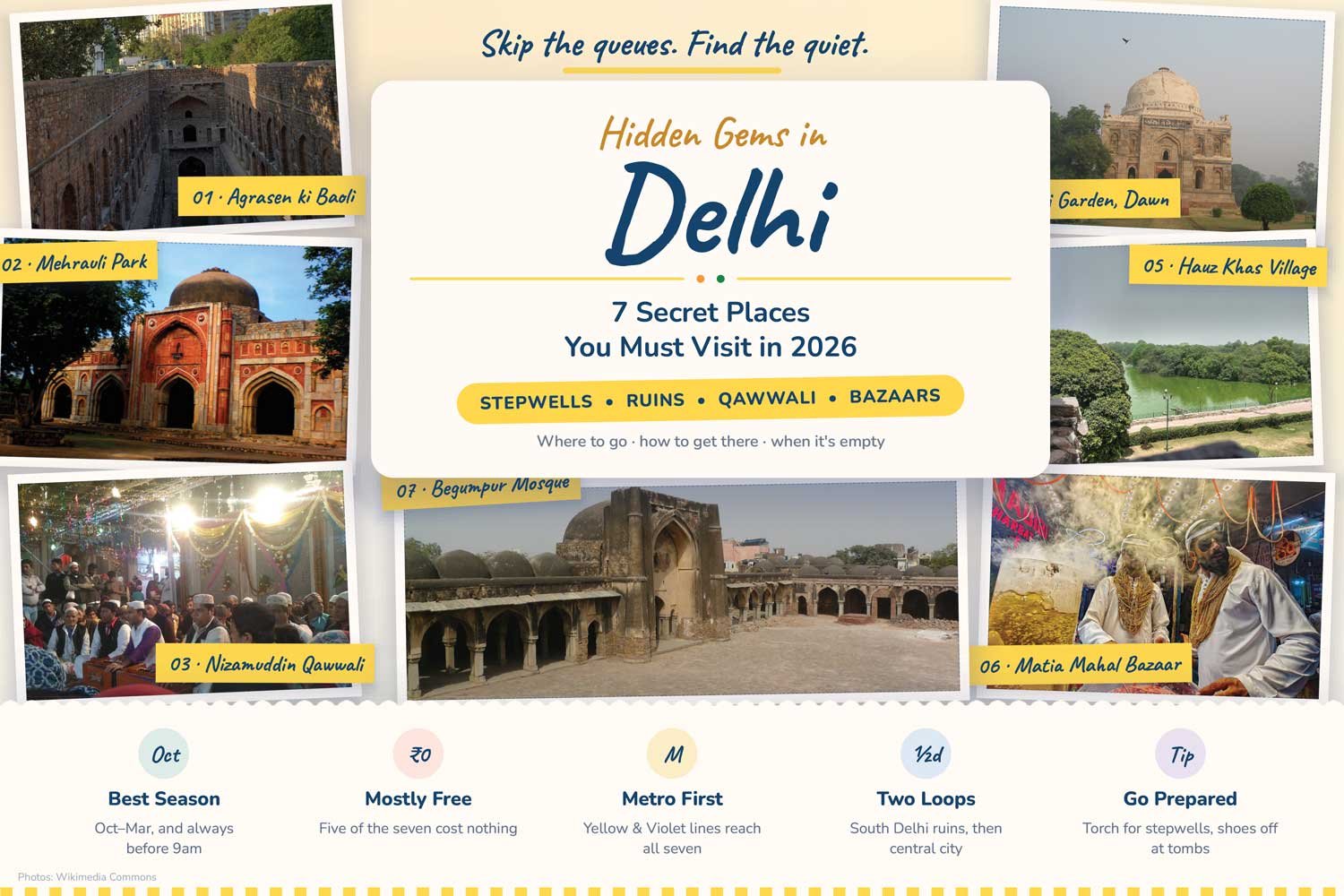
Hidden Gems in Delhi: 7 Secret Places You Must Visit in 2026